How To Interpret Nicotine Pouch Strength
Picking the right nicotine pouch starts with understanding the range of available strengths and how the number of milligrams per pouch translates into different categories.
In this nicotine strength guide, we’ll break it down simply, so adult nicotine users can better understand strength labels and make more informed choices at checkout.
Key Takeaways
- Nicotine pouch strengths in the U.S. are listed as milligrams (mg) of nicotine per pouch.
- A 6mg pouch contains 6mg of nicotine and this will be clearly marked on the can. That doesn’t necessarily mean you’ll absorb the full 6mg. In one clinical study where participants used pouches for an hour, about half the labeled nicotine amount was extracted on average.
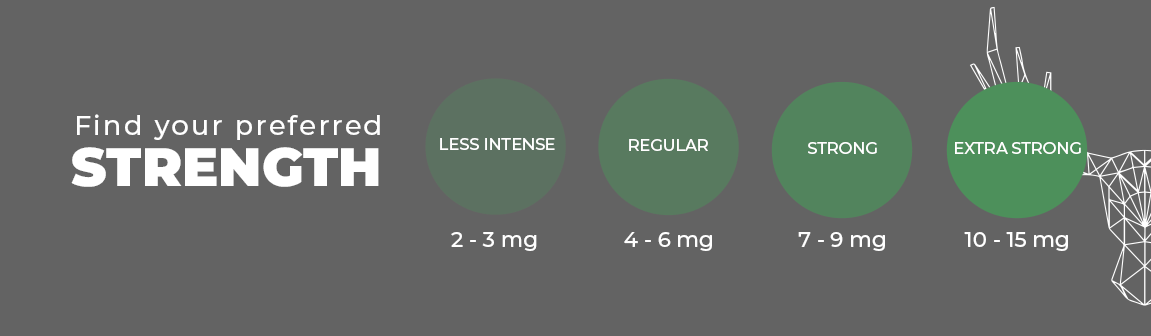
- Northerner categorizes pouches as Less Intense (2–3mg of nicotine), Regular (4–6mg), Strong (7–9mg), and Extra Strong (10–15mg).
- Other countries might label the strength as milligrams of nicotine per gram or by using a visual scale (the more dots, the stronger the pouch ◉◉◉◎◎).
- The standardized American strength labeling system is more reliable because it clearly states how many milligrams are in an individual portion.
Nicotine Pouch Labeling in the US vs Other Countries
All nicotine pouches sold in the U.S. have strength prominently labeled on the can in milligrams (mg) per pouch. This indicates how much nicotine is contained in each individual pouch or portion.
This approach differs from other markets, such as the U.K. and Europe, where strength may be listed either in terms of weight (milligrams per gram) or by using a visual scale (normally a series of dots with each dot correlating to a higher strength).
The downside of mg/g is that it requires some calculation to figure out the nicotine content of a single pouch. Visual scales can also vary by brand, meaning three dots on one brand’s package may not represent the same strength as three dots on another brand’s packaging.
| US |
Europe |
|
Miligrams per pouch Clearly stated on the can (e.g. Rogue Wintergreen 6mg contains 6mg of nicotine in each pouch) |
Miligrams per gram Nicotine content is listed by product weight. To estimate nicotine per pouch, multiply nicotine content (mg/g) by pouch weight (g). |
|
Visual scale A visual representation on a scale from low strength (fewer dots; ◉◎◎◎◎) to high strength (more dots; ◉◉◉◉◉). However, this is not standardized across brands. |
Note: The amount of nicotine listed on the can is not necessarily the amount extracted during use (Lunell et al. 2020).
Categorization of Nicotine Pouch Strengths
So, we’ve established the strength of a nicotine pouch in the U.S. is measured in terms of milligrams per pouch. But what do those numbers really mean?
To make it easier to navigate as a shopper, we group all the pouches sold on Northerner into the following strength categories.
- Less Intense pouches contain 2-3mg of nicotine. This is the lowest concentration of nicotine you’ll currently find stocked on our site.
- Regular pouches contain 4-6mg of nicotine and seem to be the most frequently bought among existing nicotine pouch users.
- Strong pouches contain 7-9mg of nicotine and offer slightly more nicotine for people seeking a stronger effect.
- Extra Strong pouches contain 10-15mg of nicotine and cater to experienced users looking for a robust experience.
Understanding Nicotine: What’s Inside Counts
The number of milligrams per pouch is a standardized measure of nicotine content. For example, a 3mg pouch contains more nicotine than a 2mg pouch, even though both fall within the Less Intense range.
However, the perceived strength of a pouch can vary by product and by user. Factors such as flavor, pouch moisture, pouch format, and individual use patterns may also affect how strong a pouch seems.
Impact of Flavor on Perceived Strength
Some nicotine pouch users report that mint, menthol, and citrus flavors can make a pouch feel stronger. This may be related to the cooling or sharp sensory qualities of those flavors, such as the cooling rush of mint or the acidity of citrus.
This may make a pouch seem stronger than the number of milligrams on the can and is a factor worth considering when trying to find the right balance of strength and flavor.
Impact of Moisture on Strength
The moisture level of a nicotine pouch can also affect how strong it feels.
A dry or semi-dry pouch typically releases contents more gradually because it takes longer to moisten. Soft or moist pouches may feel stronger earlier in use because the pouch is already hydrated.
Which Nicotine Strength Should You Choose?
Only adult nicotine users can judge which nicotine strength is appropriate for them, but there are some key considerations to keep in mind.
- If you’re transitioning from another nicotine- or tobacco-based product, review the product label carefully and consider starting with a lower-milligram product before increasing strength, if needed.
- Always read the label before use and consider how the perceived strength of a Less Intense, Regular, Strong, or Extra Strong pouch may be affected by the format, moisture, and flavor.
- Stronger does not necessarily mean better. The key is to understand the nicotine content per pouch, compare products carefully, and follow product instructions.
Nicotine is an addictive substance and should only be used by adults aged 21 and over who currently use tobacco or nicotine. Northerner takes this requirement seriously and uses age-verification protocols for online purchases.
Important: The products sold on this site contain nicotine. Nicotine is an addictive chemical that may increase heart rate and blood pressure and pose risks for individuals with certain medical conditions, particularly cardiovascular disease. These products are intended only for adult (21+) current nicotine users and are not for non-users. Sales to persons under 21 are prohibited.