
Are Nicotine Pouches Safe? Side Effects & Long-Term Use
Some users wonder, are nicotine pouches safe? The complete answer to this question requires long-term studies. Even though they avoid smoke and combustion, nicotine pouches are not considered risk-free. This guide explains side effects of nicotine pouches and tips for responsible use.

Key Points
- Short-term side effects of nicotine pouches can include gum irritation, dizziness, dry mouth, and increased heart rate.
- These nicotine pouch side effects are more common for new users or those using high-strength pouches.
- Hiccups and nausea can also occur.
- The long-term effects of nicotine pouches are still being researched.
Table of Contents
Are Nicotine Pouches Safer Than Smoking or Vaping?
Nicotine pouches do not involve burning or inhalation, so they avoid the smoke and toxic chemicals associated with smoking.
According to the NHS, it is these chemicals in cigarette smoke which are linked to cancer, heart disease, and respiratory problems.4
In a 2025 briefing, Action on Smoking and Health (ASH) wrote:5
“The research consensus is that nicotine does not cause cancer, nor is it linked in isolation to most of the diseases that smoking causes.”
However, nicotine pouches still contain nicotine, which is an addictive substance.
For more information, explore our “Is Snus Better Than Vaping?” guide.
What Are The Side Effects of Nicotine Pouches?
Tobacco-free nicotine pouches contain nicotine, which is an addictive substance.
Nicotine itself can cause short-term side effects, especially for those who are new to using nicotine pouches or have chosen a strength that’s higher than their tolerance.
This is a commonly searched query online, for example by people who search for “PABLO side effects” and “VELO nicotine pouches side effects”.
These side effects are typically mild and temporary.
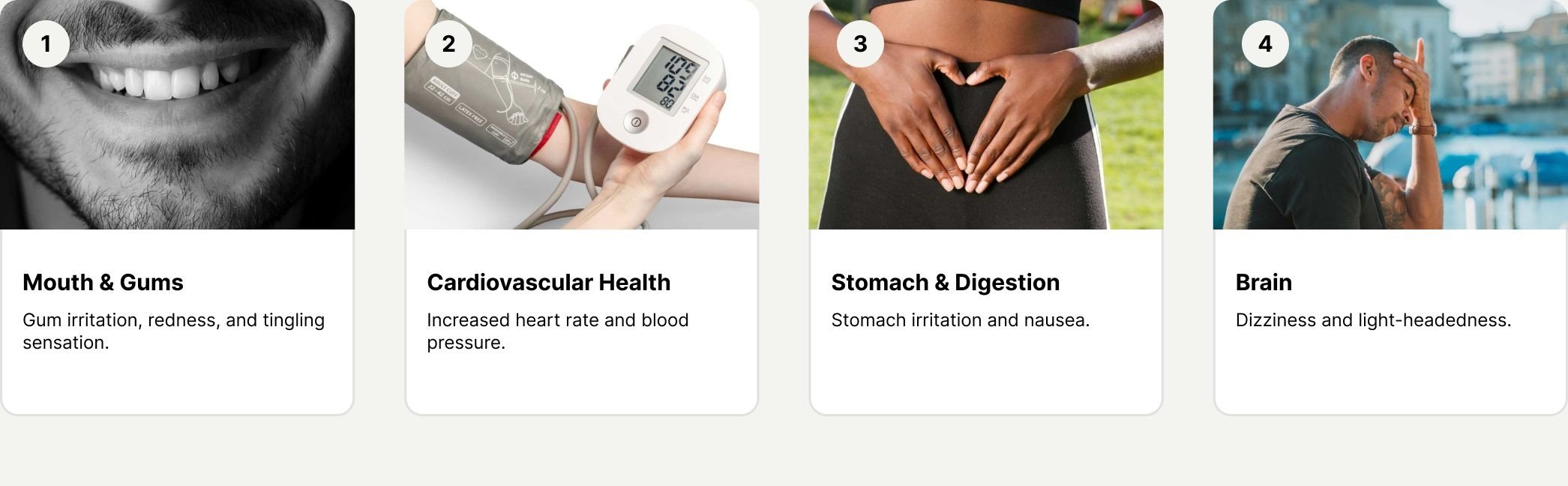
There are four key areas where users may typically experience side effects of nicotine pouches:
- Mouth and gums (gum irritation, tingling sensation)
- Cardiovascular system (increased heart rate)
- Stomach and digestion (stomach irritation or nausea)
- Brain (dizziness)
Learn more about how snus works in our what are nicotine pouches guide.
Effects on Mouth and Gums
Some users report a tingling or burning sensation where the nicotine pouch rests.
Research supports that gum irritation or redness can occur from frequent nicotine pouch use.1
This happens because nicotine (and other nicotine pouch ingredients like flavourings) can be slightly harsh on sensitive mouth tissues.
Dry mouth is another common effect, as nicotine can reduce saliva production.6
Effects on Cardiovascular Health: Does Nicotine Increase Blood Pressure?
A recurring question is, “Does nicotine increase blood pressure?”
Nicotine can temporarily increase heart rate and blood pressure because it activates the sympathetic nervous system, which is responsible for the body's fight or flight response.2
Read more in the section Does Nicotine Increase Blood Pressure?
According to the British Heart Foundation, nicotine:3
“does not cause acute cardiac events or coronary heart disease…[but] it raises the heart rate. Nicotine…is not a significant health hazard for people without heart conditions. But nicotine is a problem for people with heart disease.”
Effects on Stomach and Digestion
Some people feel mild stomach upset, nausea, or even hiccups. This can happen if nicotine is swallowed in the saliva, or if the pouch strength is higher than the body is used to.
Effects on the Brain
Feelings of dizziness or a light-headed “buzz” can occur, especially for new users or when using a stronger pouch.
This effect, sometimes referred to as a “nicotine buzz” or “nicotine rush”, has been associated with nicotine’s stimulant properties. Some users report that this sensation feels strongest during initial use and may vary over time.
Find out more in our guide “What Is a Nicotine Rush?”
Does Nicotine Increase Blood Pressure?
Yes. Nicotine temporarily increases blood pressure.2
This happens because nicotine acts as a stimulant and triggers the release of norepinephrine, which makes your heart beat faster and blood vessels tighten.
Why Do Nicotine Pouches Give Me Hiccups?
If you’re wondering “why do nicotine pouches give me hiccups?”, this sensation can occur due to the pouch slightly irritating the throat or stimulating swallowing muscles.
This effect is usually short-lived and goes away once the pouch is removed.
Why Do Nicotine Pouches Make Me Feel Sick?
Some users also ask: “Why do nicotine pouches make me feel sick?” Feeling queasy or nauseous may occur if the pouch strength is higher than your tolerance, if you’re using pouches on an empty stomach, or if nicotine is swallowed with saliva.
These sensations are linked to nicotine’s stimulant effects and typically ease once your body adjusts. How long they last can vary depending on the user–learn more about how long nicotine stays in your system.
To reduce both hiccups and nausea, see the section on Tips for Responsible Pouch Use.
Can Nicotine Pouches Cause Acne?
Some users wonder whether nicotine affects skin health.
While research is still developing, nicotine may influence blood flow and inflammation, meaning there can be a link between nicotine and acne for some users.
Which Factors Affect Nicotine Pouches Side Effects?
There are several factors that may contribute to stronger nicotine pouch side effects:
- Nicotine content
- Pouch moisture levels
- Nicotine release speed
|
Factor |
Explanation |
|
Nicotine Content |
The higher the nicotine strength in a pouch, the more intense the effects can be. Stronger doses may increase the likelihood of side effects like nausea, dizziness, or a rapid heart beat, especially for new or sensitive users. |
|
Pouch Moisture Levels |
Moisture affects how quickly nicotine is released and absorbed through the gums. Moister pouches tend to deliver nicotine faster, which can lead to a more immediate reaction. |
|
Nicotine Release Speed |
Some pouches are designed for quick release. This can cause a sharper spike in nicotine levels, which may increase the likelihood of noticeable side effects. |
Nicotine Pouches Side Effects Long-Term
Because nicotine pouches are relatively new compared to cigarettes or chewing tobacco, research on the long-term effects of using nicotine pouches is ongoing and knowledge gaps remain.
Current studies mainly highlight nicotine’s addictive properties and the potential for ongoing oral irritation.
Tips for Responsible Pouch Use
There are several things you can try if you want to reduce any perceived side effects of nicotine pouches:
- Opt for a lower pouch strength.
- Avoid using on an empty stomach.
- Only use one pouch at a time.
- Drink water during or after use.
- Rotate pouch placement to help reduce local irritation.
- Practice good oral hygiene.
- Try different brands and flavours to find what feels best.
You may also want to consider how many nicotine pouches a day you are using.
Our Commitment to High Standards for Nicotine Pouches
At Northerner, we maintain high quality standards. Nicotine pouches are routinely tested with Eurofins laboratories, with results published on Nicoleaks.
Tests include analyses for nicotine and pH levels to ensure transparency for our customers.
Final Thoughts: Should You Use Nicotine Pouches?
Nicotine pouches are a tobacco-free and discreet way of using nicotine, but they are not risk-free. They can cause short-term side effects and may contribute to long-term oral irritation.
Research is ongoing into other long-term effects. For further guidance, it’s recommended to speak with a healthcare professional.
FAQs Are Nicotine Pouches Safe?
Are nicotine pouches bad for you?
Nicotine pouches do not involve combustion, which means that they do not contain the toxic chemicals associated with smoking. It is these chemicals that are linked to cancer, heart disease, and respiratory problems.
However, nicotine pouches are not risk-free, as nicotine is an addictive substance. Side effects can include gum irritation, hiccups, and dizziness.
Why does nicotine make me dizzy?
Nicotine is a stimulant. Because of this, it can cause light-headedness or a 'buzz', especially for new users.
Why do nicotine pouches make me feel sick?
This may happen if you swallow nicotine or use a pouch that’s stronger than your tolerance.
Does nicotine increase blood pressure?
Yes, nicotine temporarily increases blood pressure. This is because nicotine is a stimulant that makes your heart beat faster and blood vessels tighten.
What are the risks of nicotine pouches?
Nicotine pouches are not risk-free and may cause gum irritation, dry mouth, dizziness, nausea, hiccups and temporary increases in heart rate or blood pressure.
Do nicotine pouches damage gums?
Frequent nicotine pouch use can lead to irritation of the gum and/or redness, as well as dry mouth. Proper oral care is important when using nicotine pouches.
Are nicotine pouches better than smoking?
Nicotine pouches are tobacco‑free products that deliver nicotine without involving smoke or combustion.
Because they contain no tobacco leaf and do not burn, they do not expose users to the toxicants found in cigarette smoke.
What are PABLO side effects and VELO nicotine pouches side effects?
When people search for “PABLO side effects” and “VELO nicotine pouches side effects”, they typically want to understand the side effects of nicotine pouches.
Snus side effects can include gum irritation, dizziness, dry mouth, increased heart rate, hiccups, and nausea.
These effects are typically short-lived and are more common among new users or those who are sensitive to nicotine.
Sources
- Nicotine pouches: a review for the dental team. Joshua M. Jackson, Anthony Weke & Richard Holliday.
- The sympathetic control of blood pressure. Patrice Guyenet.
- Is vaping safe? The British Heart Foundation.
- Vaping to quit smoking. NHS.
- Evidence summary: The health effects of nicotine. Action on Smoking and Health.
- What is the impact of nicotine pouches on oral health: a systematic review. Rungraungrayabkul, Gaewkhiew, Vichayanra, Shrestha, and Buajeeb.
