
Help to Quit Smoking – Harm Reduction Can Save Lives
Quitting smoking is one of the most effective actions for improving health – but for many people it is easier said than done. At the same time, examples such as Yorkshire, where stop‑smoking services work in a structured and proactive way with harm reduction, show that a more pragmatic approach can help more people move away from cigarettes.
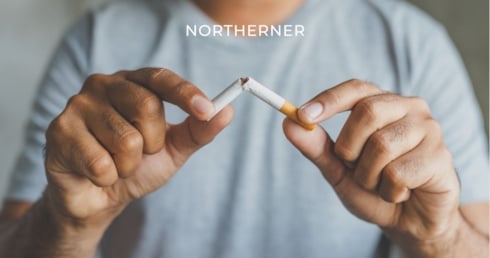
Key Takeaways
- Harm reduction saves lives: A pragmatic approach to quitting smoking helps more people reduce harm and move away from cigarettes, especially those who struggle with an immediate quit.
- Different paths work for different people: Gradual change, supported by nicotine replacement therapies, vapes or nicotine pouches, can be more effective than an “all or nothing” model.
- Yorkshire leads by example: Structured, proactive investment in harm‑reduction‑based stop‑smoking services shows how public health can reach more smokers in practice.
- Support matters more than blame: Inclusive, people‑centred stop‑smoking services increase quit attempts and help reduce tobacco‑related harm across society.
The journey to quitting smoking looks different for different people. For many smokers, an immediate and complete stop is difficult to achieve. This is why harm reduction is increasingly highlighted as a complement to traditional methods – focusing on reducing harm here and now, while the goal of a smoke‑free life remains unchanged.
At the same time, approaches to harm reduction differ between support services. Some stop‑smoking services adhere to a strict “all or nothing” perspective, while others take a more pragmatic approach, placing the individual’s circumstances and needs at the centre. Experience shows that this pragmatism can be crucial in reaching more smokers – particularly those who have previously struggled to quit.
Yorkshire Shows How Harm Reduction Can Work in Practice
A clear example of a more forward‑thinking approach can be found in Yorkshire, where local smoking‑cessation programmes have chosen to work with harm reduction in a structured, proactive and long‑term way. Here, traditional support has been combined with nicotine replacement therapies and, in some cases, vapes as tools for harm reduction.
According to the BBC, stop‑smoking services in the region have offered both personal counselling and free support, with the aim of lowering barriers for people who have otherwise found it difficult to quit completely. What sets Yorkshire apart is not only its openness to alternative methods, but also the fact that the region is actively investing in these efforts and integrating them into mainstream healthcare and public health work.
Experience shows that when people are given access to flexible options, ongoing support and clear structures, their willingness to start a quit attempt increases – even among groups that have not previously been reached by more traditional methods.
Small Steps Can Make a Big Difference
Traditional smoking cessation has long been characterised by an “all or nothing” principle. However, both research and practical experience show that gradual changes often lead to better and more sustainable outcomes. Nicotine replacement therapies, counselling and tailored support programmes can be important tools for reducing dependence and gradually breaking the habit.
From a harm‑reduction perspective, nicotine pouches can also play a role for some smokers – particularly for those who need a smoke‑free alternative with a lower risk profile as a step away from cigarettes. The point is not which tool is used, but that more people are given the opportunity to leave the most harmful form of consumption behind.
Lindblad: “Perfect Solutions Must Not Stand in the Way of Real Benefits”
In the Swedish debate, there has long been an understanding that a more pragmatic
approach can save lives.
“We need to dare to face reality as it is. For some smokers, harm reduction is the first
genuine step away from cigarettes. If less harmful alternatives – such as nicotine
replacement therapies, vapes or nicotine pouches – can reduce disease and suffering,
that is progress,”
says Markus Lindblad, Head of Legal and External Affairs at Northener, who is clearly positive about harm reduction as a public health strategy. He stresses that harm reduction does not change the end goal.
“The long‑term goal is still for people to become completely smoke‑free. But the paththere needs to be allowed to look different.”
Support Instead of Blame
A recurring theme in both international and Swedish debates is the importance of support rather than moralising. Smoking is closely linked to addiction, stress, mental health issues and socio‑economic factors. When interventions are designed with an understanding of this, the chances increase that more people will actually succeed in quitting.
A more inclusive and pragmatic approach makes it possible to reach groups that might otherwise risk being left outside healthcare and societal support systems.
“If we are serious about reducing tobacco‑related harm, we must use the methods that
actually work for people in their everyday lives,”
Markus Lindblad concludes.
