
Misunderstanding and Misinformation: Public Perception of Nicotine Products
Misconceptions about vaping and nicotine are rising in the UK, with many wrongly believing alternatives are as harmful as smoking. New survey data highlights how misinformation is shaping attitudes, discouraging smokers from switching, and potentially undermining public health progress.

Key Points
- Many Brits, and especially Gen Z, misunderstand the risk profile of alternative nicotine products.
- Gen Z may not have received as much information about the dangers of smoking as previous generations.
- It may also be driven by regular misinformation about alternative nicotine products in the media.
- Over recent years, fewer smokers have been switching to less harmful alternative nicotine products.
Getting It Wrong on Risk
Despite playing a significant role in reducing smoking rates across the UK, vapes and other alternative nicotine products remain widely misunderstood.
Misconceptions about their relative risks have grown in recent years, with many smokers now believing that vaping is as harmful as or even more harmful than smoking.
This shift in perception appears to be having real consequences, contributing to a slowdown in declining smoking rates and even reversals in some areas.
The Effects on Public Health Efforts
Confusion around nicotine and the relative risk of nicotine products, compounded by unchallenged misinformation, is shaping public attitudes in ways that may undermine public health efforts.
As a result, some smokers are discouraged from switching to less harmful alternatives, while others continue smoking under the mistaken belief that the risks are comparable.
To better understand these perceptions, Northerner surveyed 2,000 UK adults, exploring attitudes toward smoking, nicotine, and alternative products.
This paper summarises the key findings and what they reveal about the current state of public understanding about nicotine and alternative nicotine products.
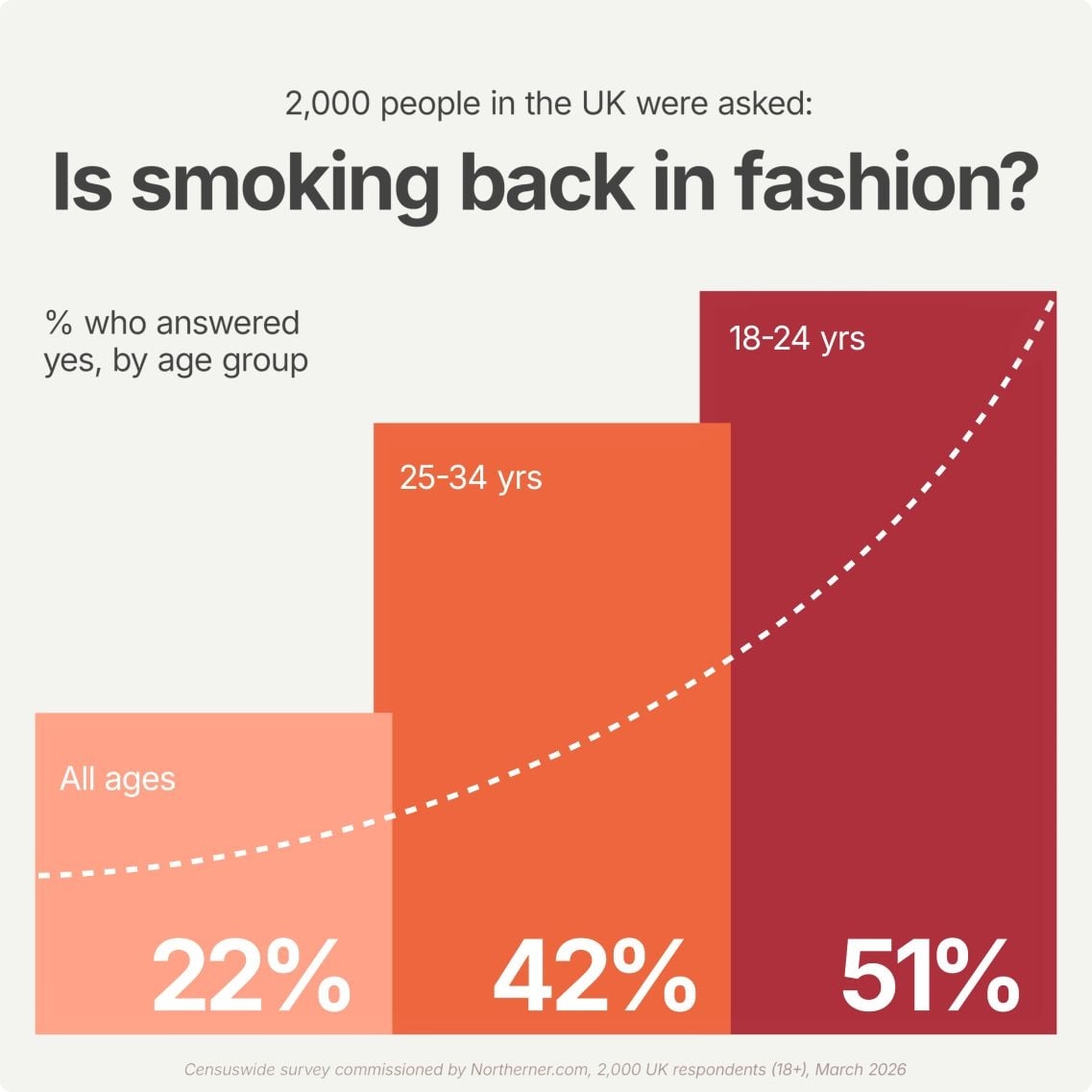
Is Smoking Back in Fashion?
With some celebrities branded as ‘cigfluencers’, smoking seems to have invaded popular culture.
Visibility of smoking in the media has increased and many Gen Z view smoking as fashionable.
- 22% of survey respondents agree that smoking is back in fashion.
- This rises to 51% of 18 – 24 year olds and 42% of 25 – 34 year olds.
Misinterpreting the Relative Risk of Products
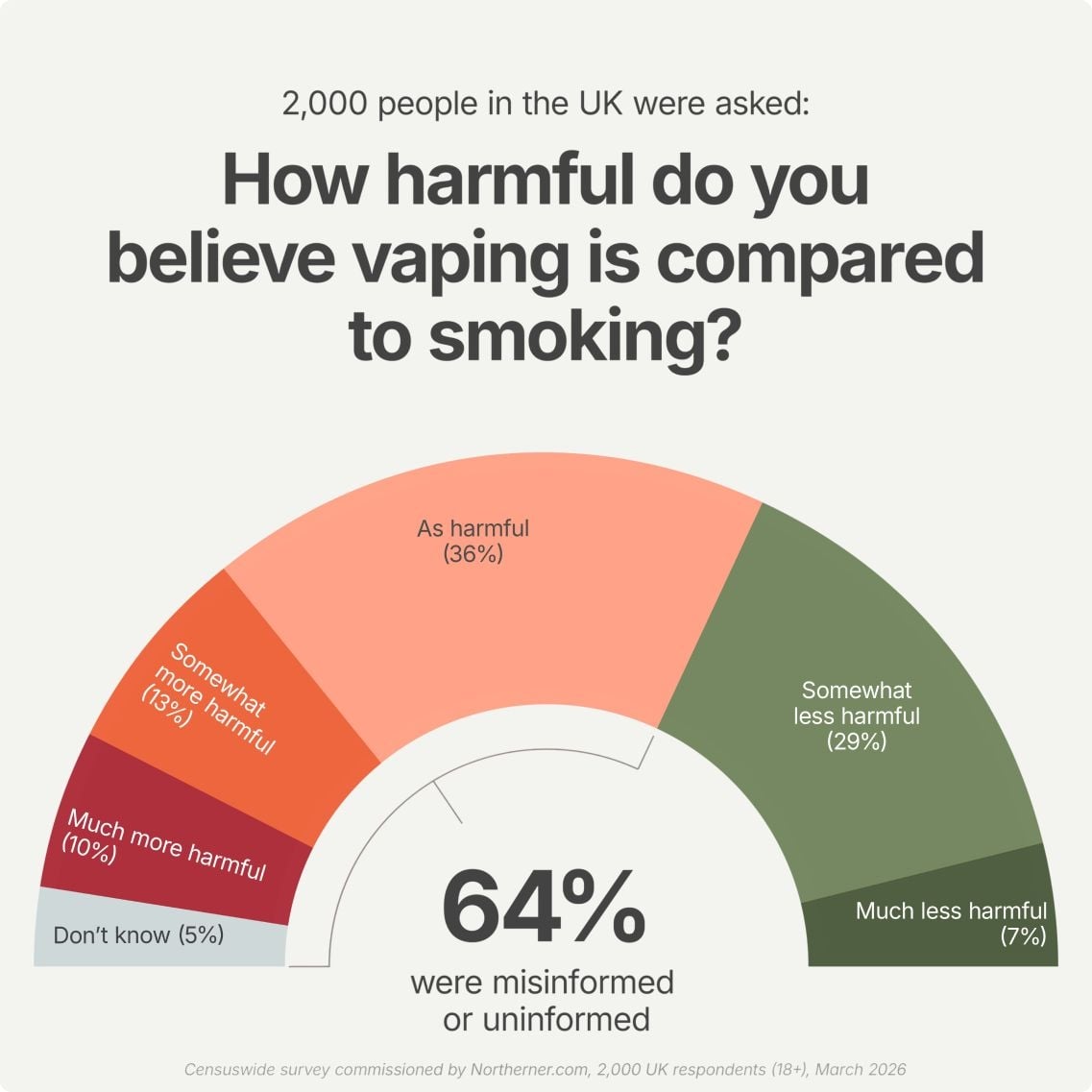
The survey data indicates that people significantly overestimate the risk of alternative nicotine products compared to cigarettes.
Gen Z are again much more likely to believe that vapes are as harmful as cigarettes, with 72% of those aged 18-24 believe that vaping is as harmful or more harmful than smoking.
- 59% of respondents believe that vaping is as harmful or more harmful than smoking cigarettes.
- 45% of respondents believe that nicotine pouches are as harmful or more harmful than smoking cigarettes.
- 28% believe that nicotine chewing gums such as Nicorette are as harmful or more harmful than smoking.
Knowledge About Nicotine
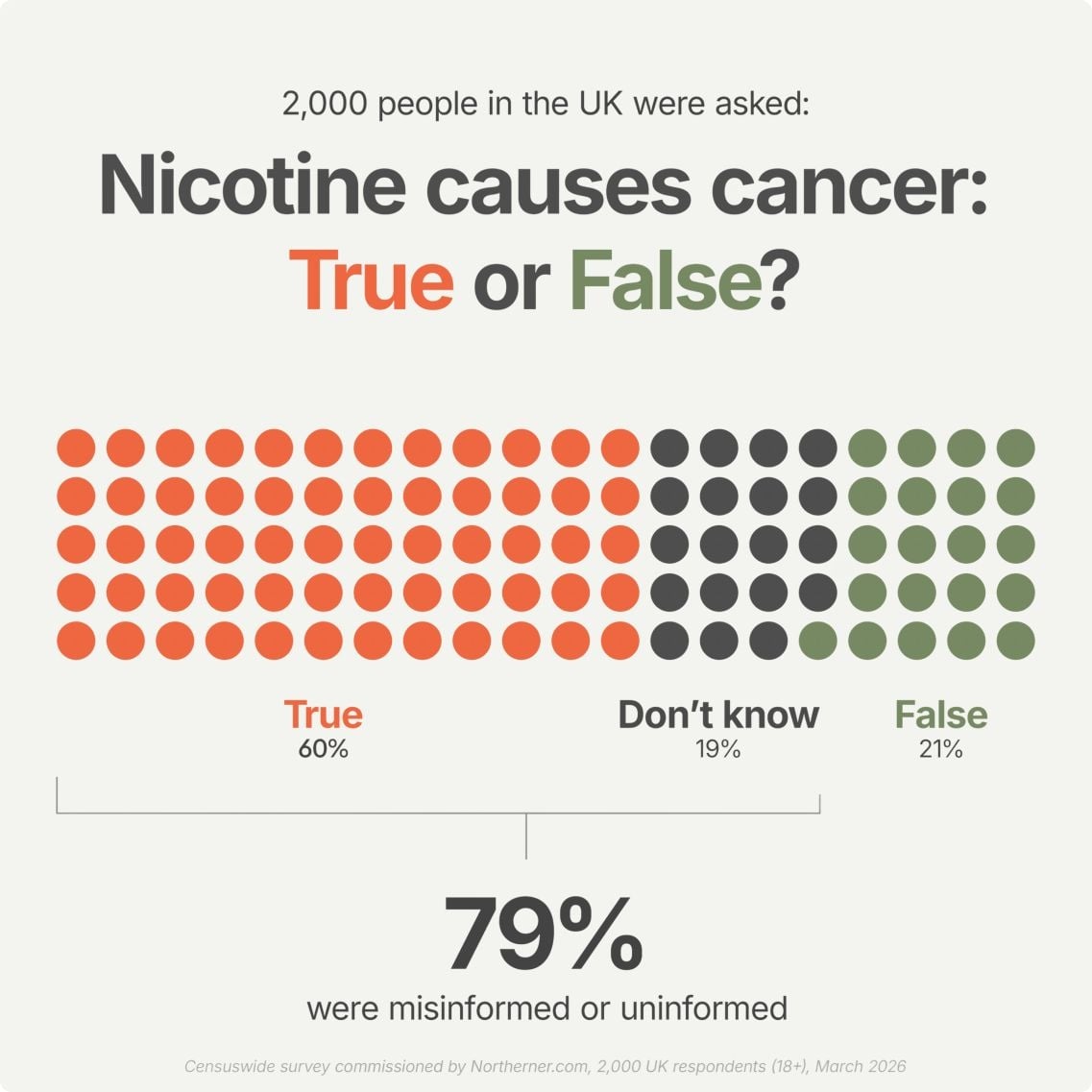
The findings show that most people misunderstand the risks of nicotine.
This is significant because if smokers wrongly believe nicotine itself is the main danger, they are less likely to switch to safer alternatives.
- 60% of respondents said they believe that nicotine causes cancer.
- 47% believe that nicotine is the most harmful element in a cigarette.
- 46% believe that vaping exposes a vaper to more harmful chemicals than smoking.
- 42% of respondents said they believed that nicotine pouches or snus causes oral cancer.
The Idea of an Epidemic
Although around 10% of the UK population are vapers, there is a widespread perception of there being a vaping ‘epidemic’.
- 78% of respondents believe there is a vaping epidemic in the UK.
- 74% of vapers believe that there is a vaping epidemic in the UK.
(Mis)informed
Despite many survey respondents being mistaken in their understanding of alternative nicotine products, most felt they were informed.
The second most popular source of information about nicotine products was news media.
- 62% of respondents said they believed themselves to be somewhat informed or well informed about nicotine products.
- 33% said they get their information and education about nicotine products and risks from the news media.
Final Thoughts
Why does it matter if most people in the UK are misinformed about nicotine and nicotine products?
The challenge is that when misunderstandings about the relative risk of nicotine products are so widespread, there are implications for public health in the UK.
Smoker can only make the choice to switch if they have access to accurate and unbiased information.
Some balance needs to be brought to the media coverage of nicotine and nicotine products. And every click bait article containing misinformation about alternative nicotine products risks dissuading another smoker from making a change.
Access the Report
