
The Sporting Map of Britain: Which Sport Takes the Crown?
Football may still wear the crown as the UK’s most popular sport, but it’s far from the only one capturing the nation’s attention. New research from Northerner explores how sporting passions vary across cities and regions, revealing a diverse and evolving sporting landscape.
Key Points
- Formula 1 has emerged as England’s most popular sport after football.
- Tennis remains widely followed well beyond Wimbledon season.
- Rugby continues to dominate in Wales and parts of Northern Ireland.
- Several cities show distinctive sporting identities that break national trends.
- Darts is experiencing renewed interest, supported by growing fan engagement.
Britain’s Sporting Identity Beyond Football
While football remains the most popular sports overall among the UK, it’s not the whole story.
Northerner set out to explore what other sports people are passionate about—and whether those preferences differ from city to city and region to region.
New research from Northerner provides insight into Britain’s sporting identities by surveying Premier League fans about their other favourite sports. We’ve uncovered a vibrant landscape of regional preferences, reflecting both longstanding traditions and more recent sporting influences. It also reveals one sport that’s quietly racing ahead.
Formula 1: England’s Growing Love for Motorsport
Formula 1 surges into pole position across much of England. From high-profile British drivers to Netflix-fuelled global interest, F1’s momentum shows no sign of slowing down.
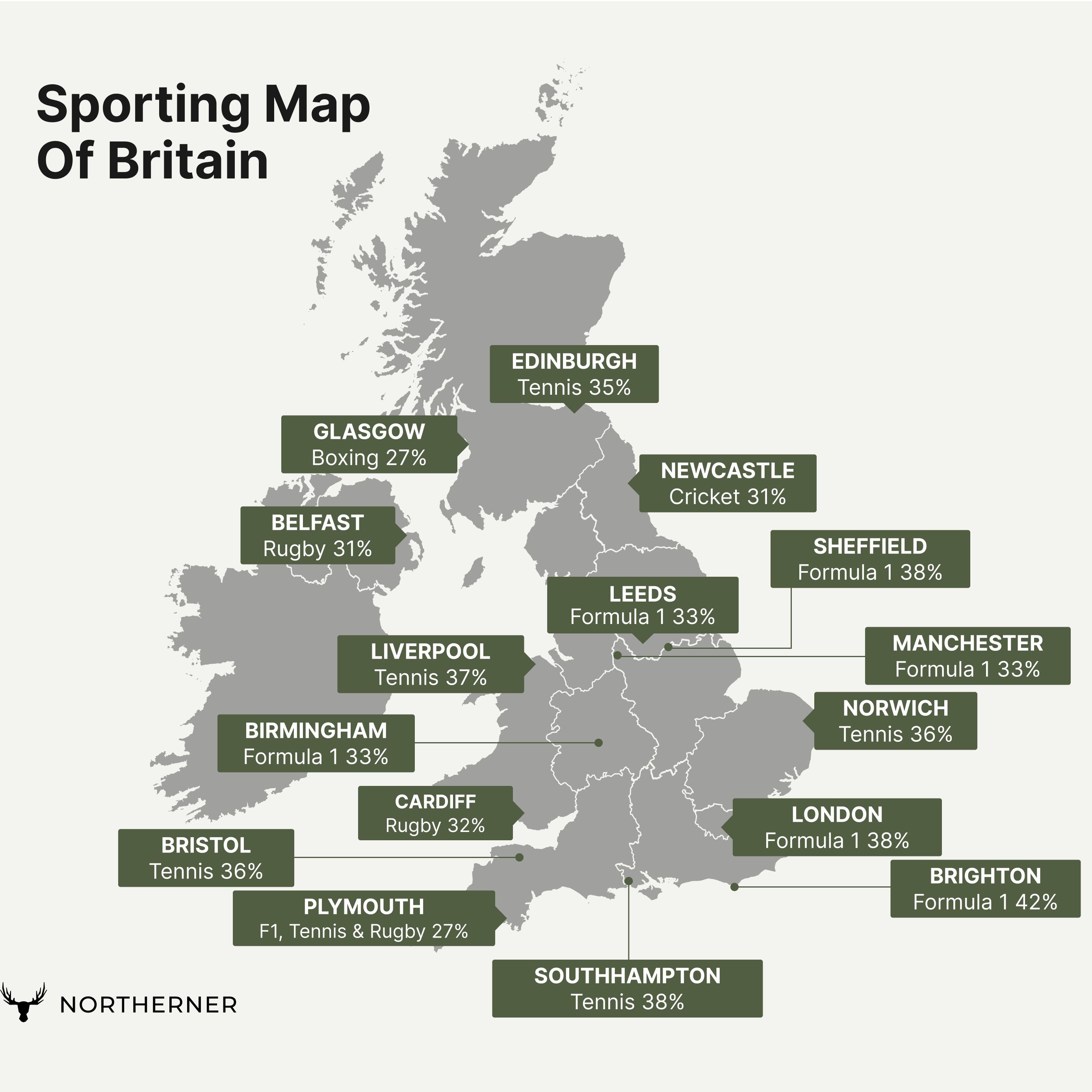
It is the second favourite sport of football fans in:
- Brighton (43%)
- London (38%)
- Sheffield (38%)
- Nottingham (34%)
- Birmingham (33%)
- Leeds (33%)
- Manchester (33%)
Tennis: A Favourite Far Beyond Wimbledon
Tennis might be synonymous with Wimbledon, but its appeal stretches far wider than London.
The sport’s widespread popularity suggests that tennis has successfully transitioned from a seasonal spectacle into a year-round passion for fans across the UK, with other racket-style sports rising in popularity, including padel.
Tennis is most popular in:
- Greater London: 38%
- Southampton: 38%
- Liverpool: 37%
- Norwich: 36%
- Edinburgh: 35%
Rugby: A Long-Standing Tradition
Whether Rugby Union or Rugby League, this traditional sport still reigns supreme in parts of the UK.
In Wales, rugby union has always been a strong national symbol, especially in mining communities. In Northern Ireland, rugby grew through schools and universities to become part of the national sporting identity.
So, it’s no surprise that Cardiff and Belfast voted rugby as their favourite sport after football, followed by:
- Bristol: 36%
- Cardiff: 32%
- Belfast: 31%
Cities with Distinct Sporting Identities
Some cities reveal their own distinct sporting identities:
- Newcastle: Cricket takes the top spot at 31% - one of the study’s most unexpected results.
- Glasgow: Boxing and fighting sports lead the way, with 27% support.
- Plymouth: An unusual three-way tie between Formula 1, tennis and rugby.
The UK’s Top 10 Sports After Football
When football is removed, here’s how the nation’s sporting preferences stack up:
- Formula 1 – 33%
- Tennis – 32%
- Rugby – 24%
- Cricket – 24%
- Boxing/Fighting – 23%
- Golf – 20%
- Athletics – 20%
- Swimming – 19%
- Basketball – 19%
- Darts – 16%
Some slightly less popular sports across the country included polo, cycling, and hockey, which only 2% of the country admitted to being fans of.
Surprisingly, 9% said they do not follow any sport apart from football!
The Next Sporting Wave
Northerner is a proud supporter of darts in the UK, including sponsoring top player Danny Noppert.
With 16% of UK Premier League fans saying they follow the darts, the sport is enjoying a major resurgence.
Looking ahead, it’s difficult to predict which sport will next capture the public imagination. But with rising interest in padel and the continued momentum behind darts, Britain’s sporting future looks just as dynamic as its present.
Football may still be king, but the UK’s sporting identity is not a one-sport story. From roaring F1 engines to centre-court drama, scrums, knockouts and dartboards, Britain’s passion for sport is broader, bolder and more regionally distinctive than ever.
